
Top 5 des fabricants de trieurs de couleurs de noix en 2026 | Meilleures machines de tri de noix IA
L'industrie mondiale de la transformation des noix devient de plus en plus compétitive. Des normes de sécurité alimentaire plus élevées, des exigences d'exportation plus strictes et des coûts de main-d'œuvre croissants poussent les transformateurs à investir dans une technologie de tri plus intelligente et plus efficace. Qu'il s'agisse de transformer des amandes, des noix, des pistaches, des noisettes, des arachides ou des noix de cajou, la qualité constante des produits est devenue l'un des facteurs les plus importants affectant la satisfaction des clients et la compétitivité du marché.
L'inspection manuelle traditionnelle n'est plus capable de répondre aux exigences de production modernes. Même les trieurs de couleurs optiques conventionnels ont souvent du mal à identifier les défauts subtils tels que les dommages causés par les insectes, une légère décoloration, les rides de surface, les fragments de coquille, les taches d'huile ou les minuscules fissures. En conséquence, les trieurs de couleurs de noix alimentés par IA sont devenus la solution préférée des transformateurs à la recherche d'une plus grande précision de tri et de coûts d'exploitation réduits.
Dans ce guide, nous comparons cinq des principaux fabricants mondiaux de trieurs de couleurs de noix en fonction de l'innovation technologique, des capacités IA, de la précision du tri, de l'efficacité de la production, de la flexibilité des applications, du réseau de services mondial et de la valeur globale pour les transformateurs de noix commerciaux.
Les fabricants énumérés ci-dessous sont présentés sans ordre particulier. Chacun offre des avantages uniques en fonction de l'échelle de production, des variétés de noix et des exigences de transformation.
Comment nous avons sélectionné ces fabricants de trieurs de couleurs de noix
Choisir le bon équipement de tri des noix implique bien plus que comparer les prix ou la capacité de production. Pour fournir des conseils pratiques aux transformateurs, nous avons évalué les fabricants en utilisant plusieurs critères clés qui influencent directement les performances de production à long terme.
1. Technologie de reconnaissance IA
La machine peut-elle identifier avec précision les défauts subtils tels que les trous d'insectes, les moisissures, les rides, les fragments de coquille, la décoloration, les marques de brûlure et les grains cassés?
2. Précision du tri
L'équipement maintient-il des performances de tri stables à des vitesses de production élevées tout en minimisant les faux rejets?
3. Gamme de produits
Une machine peut-elle gérer plusieurs variétés de noix, y compris les amandes, les noix, les pistaches, les noix de cajou, les noisettes, les arachides, les noix de macadamia, les pacanes et les produits mixtes?
4. Automatisation et contrôle intelligent
Le système prend-il en charge l'apprentissage IA, la gestion des recettes, l'exploitation à distance, l'étalonnage automatique et la gestion intelligente de la production?
5. Support technique mondial
Les clients peuvent-ils recevoir une assistance technique rapide, des pièces de rechange, des mises à niveau logicielles et un dépannage à distance?
Sur la base de ces critères, les fabricants suivants représentent certains des fournisseurs les plus compétitifs d'aujourd'hui dans l'industrie mondiale du tri des noix.
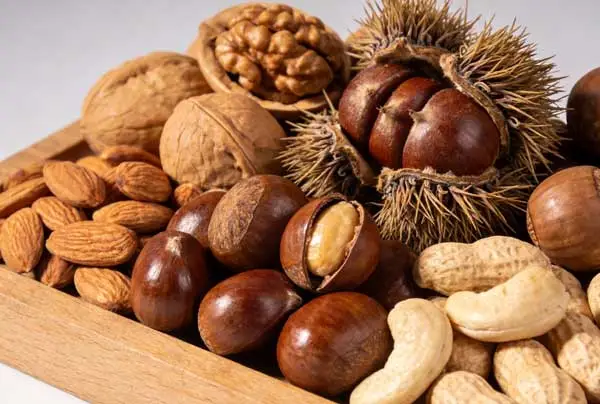
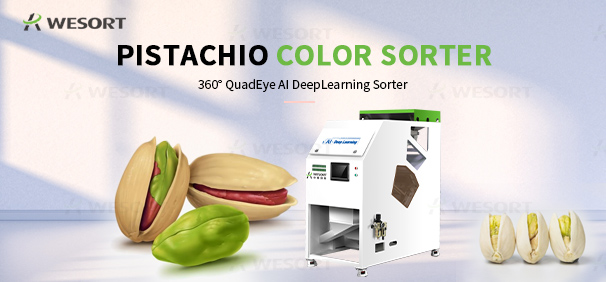
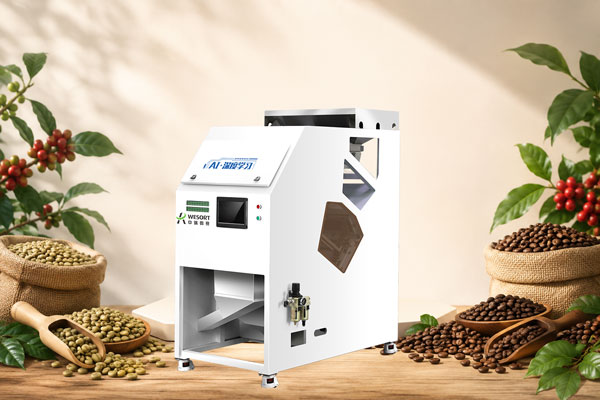
TOP 1 - Trieur de couleurs de noix WESORT QuadEye 360 ° IA
Présentation de l'entreprise
Fondée en 2012. WESORT est un fabricant professionnel spécialisé dans les équipements de tri par vision IA. La société intègre la recherche et le développement, la fabrication, les ventes et les services techniques mondiaux, en se concentrant exclusivement sur la technologie de tri intelligente.
En plus d'une décennie d'innovation continue, WESORT est passé des systèmes de tri optique conventionnels à l'un des principaux développeurs de solutions de tri IA. Aujourd'hui, son portefeuille de produits comprend des trieurs de couleurs IA, des machines de sélection IA, des trieurs infrarouges, des systèmes d'inspection par rayons X et des équipements de tri industriels personnalisés.
Les technologies de tri IA de la société ont été appliquées avec succès à plus de 7,000 matériaux différents, couvrant les noix, les grains de café, les céréales, les graines, les herbes médicinales, les fruits de mer, les aliments déshydratés, les plastiques recyclés, les minéraux, les pierres précieuses et de nombreuses applications industrielles.
Soutenu par une équipe de R & D dirigée par un doctorat, WESORT continue d'investir massivement dans l'intelligence artificielle, la vision industrielle, les algorithmes d'apprentissage en profondeur et les technologies d'imagerie multispectrale pour aider les processeurs à améliorer la qualité des produits tout en réduisant les coûts d'exploitation.
Conçu spécifiquement pour le traitement moderne des noix
Contrairement aux trieurs optiques conventionnels qui reposent principalement sur les différences de couleur, le Trieur de couleurs de noix WESORT QuadEye 360 ° IA Analyse chaque écrou de plusieurs dimensions.
Son système de reconnaissance IA évalue :
- Couleur de surface
- Cohérence de la forme
- Caractéristiques de la texture
- Variation de taille
- Les rides de surface
- Dommages causés par les insectes
- Marques de brûlures
- Cerneaux cassés
- Fragments de coquille
- Matières étrangères
Cette inspection multidimensionnelle permet aux transformateurs d'obtenir une cohérence de classement beaucoup plus élevée tout en réduisant les exigences d'inspection manuelle.
La machine est largement utilisée pour :
- Amandes
- Noix
- Noix de cajou
- Pistaches
- Noisettes
- Noix de macadamia
- Arachides
- Noix de pécan
- Pignons
- Produits de noix mélangés
Technologie de vision IA 360 ° QuadEye
La plus grande différence technologique entre WESORT et conventionnel Trieurs de couleurs de noix réside dans sa propriété Système de vision IA 360 ° QuadEye.
Au lieu d'inspecter seulement une ou deux surfaces visibles, le système utilise quatre caméras haute définition synchronisées pour capturer des images complètes de chaque écrou sous plusieurs angles au cours d'un seul passage.
Cette inspection panoramique réduit considérablement les angles morts et améliore considérablement la détection des défauts cachés sur les côtés ou le dessous des grains.
Pour le traitement des noix de qualité supérieure, cette technologie offre un avantage majeur lors de l'identification :
- Fissures capillaires
- Vortex
- Moule partiel
- Légère décoloration
- Rayures superficielles
- Peau manquante
- Bords cassés
- Cerneaux déformés
Alors que les normes de qualité continuent d'augmenter dans le monde entier, l'inspection complète est devenue de plus en plus précieuse pour les transformateurs axés sur l'exportation.
IA Deep Learning qui s'améliore avec le temps
L'intelligence du système QuadEye provient de la plate-forme d'apprentissage en profondeur exclusive de WESORT.
Au lieu de s'appuyer sur des seuils de couleur fixes, l'IA analyse en permanence les caractéristiques complexes de l'image à l'aide d'un réseau neuronal à grande échelle formé sur des millions d'échantillons de matériaux.
Le système prend actuellement en charge plus de 5,000 modèles de tri IA, permettant aux transformateurs de basculer rapidement entre différentes variétés de noix et normes de qualité.
Qu'il s'agisse de trier des amandes de qualité supérieure pour l'exportation ou des noix de cajou commerciales mélangées, les opérateurs peuvent simplement sélectionner la recette appropriée sans ajustements manuels approfondis.
Cela réduit considérablement le temps de configuration tout en maintenant une précision de classement constante.
16 × Puissance de calcul pour une production à grande vitesse
Une précision de tri élevée n'a de valeur que si la vitesse de production reste compétitive.
Pour répondre aux exigences de traitement industriel, WESORT intègre des processeurs IA hautes performances offrant 16 × puissance de calcul, permettant l'analyse en temps réel de données d'image massives tout en maintenant un débit de production stable.
L'architecture de traitement intelligente synchronise l'acquisition d'images, l'analyse des défauts et le contrôle du rejet en quelques millisecondes.
En conséquence, les transformateurs peuvent maintenir une capacité de production élevée sans sacrifier la précision du tri.
Détecter les défauts qui manquent aux trieurs de couleurs conventionnels
Les processeurs de noix nécessitent de plus en plus un équipement capable de détecter bien plus que de simples différences de couleur.
Le système QuadEye IA peut identifier avec précision :
- Grains moisis
- Noix endommagées par les insectes
- Taches noires
- Grains brûlés
- Cerneaux jaunes
- Cerneaux ridés
- Morceaux cassés
- Fragments de coquille
- Matières étrangères
- Anomalies de forme
- Défauts de surface
Pour les transformateurs fournissant des marques de détail haut de gamme ou des marchés d'exportation, cette inspection complète contribue à améliorer la cohérence des produits tout en réduisant les plaintes des clients.

Top 5 des fabricants de trieurs de couleurs de noix en 2026
Service mondial et support technique WESORT
Investir dans un trieur de couleurs de noix ne consiste pas seulement à acheter du matériel - il s'agit également de choisir un partenaire technologique à long terme. Un support technique fiable, des temps de réponse rapides et des mises à jour logicielles continues sont essentiels pour maintenir une production stable.
WESORT a mis en place un réseau de services mondial complet pour aider les clients avant, pendant et après l'installation.
Aujourd'hui, la société exploite des succursales et des entrepôts à l'étranger au Vietnam, en Indonésie, en Thaïlande, en Italie, en Espagne, au Mexique, au Pérou, en Géorgie et sur d'autres marchés internationaux, tout en servant des clients dans plus de 100 pays et régions du monde.
Pour améliorer l'expérience client, WESORT a développé son propre PAD + Système de service à distance WiFi. Les ingénieurs peuvent diagnostiquer à distance les conditions de la machine, optimiser les paramètres de tri, mettre à jour les modèles IA et fournir une assistance technique via une connexion Internet. Cela réduit considérablement les temps d'arrêt et minimise le besoin de visites de service sur site.
Les clients bénéficient également d'un support technique multilingue couvrant l'anglais, l'espagnol, le français, le vietnamien, le thaï, le chinois et d'autres langues, garantissant une communication efficace quel que soit l'emplacement.
Pourquoi plus de transformateurs de noix choisissent WESORT
Les entreprises de transformation de noix font face à une pression croissante pour offrir une meilleure qualité de produits tout en réduisant les coûts de main-d'œuvre et en améliorant l'efficacité de la production.
Le trieur de couleurs de noix IA 360 ° de WESORT QuadEye aide les processeurs à atteindre ces objectifs en combinant la reconnaissance intelligente avec l'automatisation industrielle.
Par rapport aux trieurs optiques conventionnels, le système offre plusieurs avantages pratiques :
1. Détection plus précise des défauts
Le système de vision IA identifie les défauts complexes qui sont difficiles pour les Trieurs de couleurs pour reconnaître, y compris les dommages causés par les insectes, les rides, la légère décoloration, les résidus de coquille, les grains cassés et la contamination de la surface.
2. Plus grande cohérence du produit
Chaque écrou est évalué en utilisant les mêmes normes de reconnaissance IA, éliminant les incohérences associées à l'inspection manuelle et garantissant une qualité uniforme du produit.
3. Réduction de la dépendance au travail
Le tri automatisé réduit considérablement le besoin d'inspection manuelle de la qualité, aidant les transformateurs à remédier aux pénuries de main-d'œuvre tout en réduisant les coûts d'exploitation.
4. Production flexible
Plusieurs recettes de tri peuvent être stockées et rappelées instantanément, ce qui permet aux transformateurs de basculer rapidement entre les amandes, les noix, les pistaches, les noix de cajou, les arachides, les noisettes et les produits à base de noix mélangées.
5. Réduction des pertes de produits
La structure de transport intelligente est conçue pour protéger les grains fragiles pendant le transport, aidant à minimiser les dommages mécaniques tout en maintenant une efficacité de tri élevée.
Applications typiques
Le trieur de couleurs de noix WESORT IA est largement utilisé dans l'industrie de la transformation des noix.
Les applications typiques incluent :
Transformation des amandes
Transformation des noix de cajou
Classement des cerneaux de noix
Tri des pistaches
Transformation des noisettes
Tri des arachides
Classement des noix de macadamia
Tri des pacanes
Transformation des noix de pin
Lignes de production de noix mixtes
Qu'il s'agisse de matières premières ou de produits de vente au détail haut de gamme, le système assure un contrôle qualité fiable tout au long du processus de production.
TOP 2 - Bühler SORTEX
Basée en Suisse, Bühler est l'un des noms les plus reconnus de la technologie de tri optique. Sa série SORTEX est largement utilisée dans les industries des céréales, du café, des noix et de la transformation des aliments depuis des décennies.
Les solutions de tri des noix de Bühler combinent des caméras optiques haute résolution avec des algorithmes avancés de traitement d'image pour identifier la décoloration, les fragments de coque, les matières étrangères et les noyaux endommagés. La conception modulaire de la machine permet aux processeurs de configurer l'équipement en fonction de la capacité de production et du type de produit.
La société est particulièrement connue pour sa construction de machines hygiéniques, son fonctionnement écoénergétique et sa solide réputation dans les grandes installations de fabrication alimentaire.
Forces
Marque mondiale établie de longue date.
Performance de tri optique fiable.
Forte présence dans les grandes usines de transformation industrielle.
Excellente qualité d'ingénierie.
Meilleur pour
Les fabricants de produits alimentaires à grande échelle recherchent une technologie de tri optique éprouvée avec un support mondial complet.
TOP 3 - Nourriture TOMRA
TOMRA Food, dont le siège est en Norvège, est reconnue dans le monde entier pour ses technologies de tri basées sur des capteurs utilisées dans l'industrie alimentaire.
Ses systèmes de tri des noix combinent des caméras à spectre visible avec des technologies de signature laser, infrarouge et biométrique pour détecter les défauts qui vont au-delà des simples différences de couleur.
L'un des principaux avantages de TOMRA est sa plate-forme de gestion de la production basée sur le cloud, permettant aux processeurs de surveiller à distance les performances de la machine, les statistiques de production et les exigences de maintenance.
Les solutions de la société se trouvent généralement dans des installations de transformation alimentaire haut de gamme nécessitant des analyses de production détaillées et une intégration d'usine numérique.
Forces
Technologie avancée de fusion de capteurs.
Excellente détection des matières étrangères.
Surveillance intelligente du cloud.
Solides capacités de gestion des données.
Meilleur pour
Les processeurs recherchent une surveillance intelligente de la production et une gestion avancée de la qualité numérique.
TOP 4 - Satake
Fondée au Japon, Satake a plus d'un siècle d'expérience dans les machines de transformation des céréales et s'est développée avec succès dans les équipements de tri optique pour les produits agricoles et les noix.
Les trieuses de noix Satake se concentrent sur des performances stables, une manipulation douce des produits et une fiabilité à long terme.
L'équipement fonctionne particulièrement bien lors du tri de produits délicats tels que les noyaux de cajou et les amandes tranchées, où il est essentiel de minimiser la casse.
Satake maintient également un vaste réseau de services dans toute la région Asie-Pacifique.
Forces
Manipulation douce des produits fragiles.
Fonctionnement stable à long terme.
Ingénierie japonaise de confiance.
Soutien technique régional solide.
Meilleur pour
Processeurs nécessitant des performances fiables pour les produits de noix délicats.
TOP 5 - Technologie clé
Key Technology, basée aux États-Unis, se spécialise dans les équipements d'inspection et de tri automatisés pour les opérations de transformation des aliments à grande échelle.
Ses systèmes de tri optique combinent des caméras couleur avec des capteurs proche infrarouge pour identifier les matériaux étrangers, les défauts de couleur et les variations de produits à des vitesses de production élevées.
Les équipements technologiques clés sont largement utilisés dans les environnements de fabrication alimentaire industrielle où un débit élevé et une production continue sont essentiels.
Les systèmes de tri de la société sont connus pour leur construction durable et leur capacité à fonctionner dans des conditions de production exigeantes.
Forces
Production à grande capacité.
Conception industrielle robuste.
Excellente intégration avec les lignes de production automatisées.
Solides performances en traitement continu.
Meilleur pour
Grands processeurs industriels nécessitant un débit de production maximal et une durabilité de l'équipement.
Comparaison des fabricants de trieurs de couleurs de noix
Choisir le bon trieur de couleurs de noix implique plus que comparer les spécifications. Les capacités IA, la précision du tri, la flexibilité de la production et le support après-vente jouent tous un rôle important dans les performances à long terme. Le tableau ci-dessous met en évidence les principales forces des cinq fabricants présentés dans cet article.
| Fabricant | Technologie de base | Principaux avantages | Applications appropriées |
|---|---|---|---|
| WESORT | IA Deep Learning + Vision 360 ° QuadEye | Inspection à 360 ° à quatre caméras, puissance de calcul 16 × IA, plus de 5 000 modèles IA, prend en charge plusieurs variétés d'écrous | Amandes, noix, pistaches, noix de cajou, arachides, noisettes, noix de macadamia, noix mélangées |
| Bühler SORTEX | Tri optique des couleurs | Performance stable, conception hygiénique, solide réputation mondiale | Grandes usines de transformation des aliments |
| Nourriture TOMRA | Sensor Fusion + IA Analytics | Capteurs avancés, surveillance des nuages, détection des matières étrangères | Fabricants de produits alimentaires haut de gamme |
| Satake | Technologie de vision optique | Manipulation douce du produit, fonctionnement stable | Cerneaux fragiles et noix tranchées |
| Technologie clé | Optique + proche infrarouge | Grande capacité de production, automatisation industrielle | Grandes lignes de production continues |
Bien que tous les fabricants proposent des solutions de tri fiables, le meilleur choix dépend de vos exigences de production, de votre marché cible, des normes de qualité des produits et de vos futurs plans d'expansion.
Comment choisir le bon trieur de couleurs de noix
L'achat d'un trieur de couleurs de noix est un investissement à long terme. Plutôt que de se concentrer uniquement sur le prix de la machine, les transformateurs devraient évaluer la solution de production complète.
1. Considérez les types de noix que vous traitez
Différentes variétés de noix nécessitent différentes stratégies de tri.
Par exemple :
- Les amandes nécessitent une détection précise des fissures et des fragments de coquille.
- Les noix de cajou nécessitent un transport doux pour réduire la casse.
- Les pistaches nécessitent souvent une ouverture de la coquille et une détection de décoloration.
- Les noix exigent une identification précise des dommages causés par les insectes et des grains ratatinés.
- Les écrous mixtes nécessitent des modèles IA flexibles capables de reconnaître plusieurs produits simultanément.
Le choix d'équipements conçus spécifiquement pour vos produits améliorera à la fois la précision du tri et la productivité.
2. Évaluer les capacités de reconnaissance IA
Les machines de tri modernes devraient faire bien plus que distinguer les couleurs.
Un trieur de couleurs de noix IA professionnel doit reconnaître :
- Différences de couleurs
- Variations de forme
- Texture de surface
- Rides
- Moule
- Marques de brûlures
- Trous d'insectes
- Cerneaux cassés
- Fragments de coquille
- Matières étrangères
La reconnaissance basée sur l'IA offre une bien meilleure cohérence que le traitement d'image traditionnel basé sur des règles.
3. La capacité de production compte
Une machine avec une excellente précision mais un débit insuffisant peut rapidement devenir un goulot d'étranglement de production.
Avant d'acheter, évaluez :
- Exigences de production horaire
- Expansion future de la production
- Espace d'usine disponible
- Nombre de quarts de production
- Méthodes d'alimentation en matière
La sélection de la capacité appropriée aujourd'hui peut éviter des mises à niveau inutiles de l'équipement plus tard.
4. Flexibilité du logiciel
Les transformateurs de noix basculent souvent entre différents produits tout au long de l'année.
Les machines prenant en charge la gestion des recettes permettent aux opérateurs d'enregistrer plusieurs programmes de tri pour différentes variétés de noix.
Au lieu d'ajuster manuellement des dizaines de paramètres à chaque fois, les utilisateurs sélectionnent simplement le profil de produit approprié, ce qui réduit le temps de configuration et minimise les erreurs de l'opérateur.
5. Support de service global
Un support après-vente fiable est tout aussi important que les performances de la machine.
Avant de prendre une décision d'achat, considérez :
- Le fabricant fournit-il un service à l'étranger?
- Les pièces de rechange sont-elles facilement disponibles?
- Le support technique à distance est-il disponible?
- Les logiciels et les modèles IA peuvent-ils être mis à jour?
- La formation des opérateurs est-elle incluse?
Un solide réseau de support mondial aide à maximiser la disponibilité des équipements et protège les investissements à long terme.
Questions fréquemment posées
1. Qu'est-ce qu'un trieur de couleurs de noix?
Un trieur de couleurs de noix est une machine de tri optique intelligente qui sépare automatiquement les noix défectueuses des produits qualifiés à l'aide de caméras, d'intelligence artificielle et de technologie de reconnaissance d'image. Il améliore la qualité des produits tout en réduisant les inspections manuelles.
2. Quelles noix peuvent être triées?
La plupart des trieurs de couleurs de noix IA modernes prennent en charge une large gamme de produits, y compris les amandes, les noix, les pistaches, les noix de cajou, les noisettes, les arachides, les noix de macadamia, les pacanes, les pignons de pin, les noix du Brésil et de nombreuses autres noix.
3. L'IA peut-elle détecter les défauts au-delà des différences de couleur?
Oui.
Contrairement aux trieurs optiques conventionnels, les systèmes alimentés par IA peuvent reconnaître simultanément plusieurs caractéristiques, notamment les rides, les fissures, les dommages causés par les insectes, la moisissure, les marques de brûlure, les noyaux cassés, les anomalies de forme, les fragments de coquille et les matières étrangères.
4. Un trieur de couleurs de noix IA convient-il au traitement de qualité export?
Absolument.
De nombreux exportateurs utilisent la technologie de tri IA pour répondre aux normes de qualité strictes exigées par les clients en Europe, en Amérique du Nord, au Moyen-Orient, au Japon et en Asie du Sud-Est. Une plus grande cohérence du tri contribue à améliorer la valeur des produits et la confiance des clients.
5. Une machine peut-elle traiter différentes variétés de noix?
Oui.
La plupart des systèmes professionnels prennent en charge plusieurs recettes de produits, permettant aux opérateurs de basculer entre les amandes, les noix, les noix de cajou, les pistaches, les arachides et d'autres noix avec un ajustement minimal.
6. Le tri IA réduit-il les coûts de main-d'œuvre?
Oui.
En automatisant l'inspection et le classement, les machines de tri IA réduisent considérablement la dépendance au travail manuel tout en améliorant la cohérence et l'efficacité de la production.
7. Que dois-je préparer avant d'acheter?
Les transformateurs devraient envisager :
- Variétés de noix
- Capacité de production
- Exigences de qualité
- Aménagement de l'usine
- Plans d'expansion futurs
- Support technique disponible
Discuter de ces facteurs avec le fabricant permet de garantir la solution la plus appropriée.
8. WESORT convient-il aux projets de tri personnalisés?
Oui.
WESORT fournit des solutions de tri IA personnalisées basées sur différents matériaux, capacités de production et normes de qualité. La société a développé des modèles IA depuis plus de 7,000 matériaux, permettant des solutions sur mesure dans les secteurs alimentaire, agricole et industriel.
Réflexions finales
Il n'existe pas de "meilleur" trieur de couleurs de noix pour chaque usine de transformation. La solution idéale dépend de vos produits, de vos objectifs de production, de vos exigences de qualité et de votre stratégie commerciale à long terme.
Pour les processeurs qui recherchent un tri optique éprouvé avec un service mondial établi, des fabricants tels que Bühler, TOMRA, Satake et Key Technology proposent chacun des solutions fiables dans différents segments de marché.
Pour les entreprises qui cherchent à adopter la dernière technologie de vision IA, WESORT Se distingue par ses Système de vision IA 360 ° QuadEye, algorithmes d'apprentissage en profondeur, tri intelligent à grande vitesse et solutions flexibles pour les amandes, les noix, les pistaches, les noix de cajou, les noisettes, les arachides et autres produits à base de noix.
Alors que les normes de sécurité alimentaire continuent d'évoluer et que les coûts de main-d'œuvre augmentent dans le monde, le tri par IA devient plus qu'une mise à niveau de l'équipement - c'est un investissement stratégique qui aide les transformateurs à améliorer la qualité, à accroître leur efficacité et à renforcer leur compétitivité sur le marché mondial.
L'industrie mondiale de la transformation des noix devient de plus en plus compétitive. Des normes de sécurité alimentaire plus élevées, des exigences d'exportation plus strictes et des coûts de main-d'œuvre croissants poussent les transformateurs à investir dans une technologie de tri plus intelligente et plus efficace. Qu'il s'agisse de transformer des amandes, des noix, des pistaches, des noisettes, des arachides ou des noix de cajou, la qualité constante des produits est devenue l'un des facteurs les plus importants affectant la satisfaction des clients et la compétitivité du marché.
L'inspection manuelle traditionnelle n'est plus capable de répondre aux exigences de production modernes. Même les trieurs de couleurs optiques conventionnels ont souvent du mal à identifier les défauts subtils tels que les dommages causés par les insectes, une légère décoloration, les rides de surface, les fragments de coquille, les taches d'huile ou les minuscules fissures. En conséquence, les trieurs de couleurs de noix alimentés par IA sont devenus la solution préférée des transformateurs à la recherche d'une plus grande précision de tri et de coûts d'exploitation réduits.
Dans ce guide, nous comparons cinq des principaux fabricants mondiaux de trieurs de couleurs de noix en fonction de l'innovation technologique, des capacités IA, de la précision du tri, de l'efficacité de la production, de la flexibilité des applications, du réseau de services mondial et de la valeur globale pour les transformateurs de noix commerciaux.
Les fabricants énumérés ci-dessous sont présentés sans ordre particulier. Chacun offre des avantages uniques en fonction de l'échelle de production, des variétés de noix et des exigences de transformation.
Comment nous avons sélectionné ces fabricants de trieurs de couleurs de noix
Choisir le bon équipement de tri des noix implique bien plus que comparer les prix ou la capacité de production. Pour fournir des conseils pratiques aux transformateurs, nous avons évalué les fabricants en utilisant plusieurs critères clés qui influencent directement les performances de production à long terme.
1. Technologie de reconnaissance IA
La machine peut-elle identifier avec précision les défauts subtils tels que les trous d'insectes, les moisissures, les rides, les fragments de coquille, la décoloration, les marques de brûlure et les grains cassés?
2. Précision du tri
L'équipement maintient-il des performances de tri stables à des vitesses de production élevées tout en minimisant les faux rejets?
3. Gamme de produits
Une machine peut-elle gérer plusieurs variétés de noix, y compris les amandes, les noix, les pistaches, les noix de cajou, les noisettes, les arachides, les noix de macadamia, les pacanes et les produits mixtes?
4. Automatisation et contrôle intelligent
Le système prend-il en charge l'apprentissage IA, la gestion des recettes, l'exploitation à distance, l'étalonnage automatique et la gestion intelligente de la production?
5. Support technique mondial
Les clients peuvent-ils recevoir une assistance technique rapide, des pièces de rechange, des mises à niveau logicielles et un dépannage à distance?
Sur la base de ces critères, les fabricants suivants représentent certains des fournisseurs les plus compétitifs d'aujourd'hui dans l'industrie mondiale du tri des noix.
TOP 1 - Trieur de couleurs de noix WESORT QuadEye 360 ° IA
Présentation de l'entreprise
Fondée en 2012. WESORT est un fabricant professionnel spécialisé dans les équipements de tri par vision IA. La société intègre la recherche et le développement, la fabrication, les ventes et les services techniques mondiaux, en se concentrant exclusivement sur la technologie de tri intelligente.
En plus d'une décennie d'innovation continue, WESORT est passé des systèmes de tri optique conventionnels à l'un des principaux développeurs de solutions de tri IA. Aujourd'hui, son portefeuille de produits comprend des trieurs de couleurs IA, des machines de sélection IA, des trieurs infrarouges, des systèmes d'inspection par rayons X et des équipements de tri industriels personnalisés.
Les technologies de tri IA de la société ont été appliquées avec succès à plus de 7,000 matériaux différents, couvrant les noix, les grains de café, les céréales, les graines, les herbes médicinales, les fruits de mer, les aliments déshydratés, les plastiques recyclés, les minéraux, les pierres précieuses et de nombreuses applications industrielles.
Soutenu par une équipe de R & D dirigée par un doctorat, WESORT continue d'investir massivement dans l'intelligence artificielle, la vision industrielle, les algorithmes d'apprentissage en profondeur et les technologies d'imagerie multispectrale pour aider les processeurs à améliorer la qualité des produits tout en réduisant les coûts d'exploitation.
Conçu spécifiquement pour le traitement moderne des noix
Contrairement aux trieurs optiques conventionnels qui reposent principalement sur les différences de couleur, le Trieur de couleurs de noix WESORT QuadEye 360 ° IA Analyse chaque écrou de plusieurs dimensions.
Son système de reconnaissance IA évalue :
- Couleur de surface
- Cohérence de la forme
- Caractéristiques de la texture
- Variation de taille
- Les rides de surface
- Dommages causés par les insectes
- Marques de brûlures
- Cerneaux cassés
- Fragments de coquille
- Matières étrangères
Cette inspection multidimensionnelle permet aux transformateurs d'obtenir une cohérence de classement beaucoup plus élevée tout en réduisant les exigences d'inspection manuelle.
La machine est largement utilisée pour :
- Amandes
- Noix
- Noix de cajou
- Pistaches
- Noisettes
- Noix de macadamia
- Arachides
- Noix de pécan
- Pignons
- Produits de noix mélangés
Technologie de vision IA 360 ° QuadEye
La plus grande différence technologique entre WESORT et conventionnel Trieurs de couleurs de noix réside dans sa propriété Système de vision IA 360 ° QuadEye.
Au lieu d'inspecter seulement une ou deux surfaces visibles, le système utilise quatre caméras haute définition synchronisées pour capturer des images complètes de chaque écrou sous plusieurs angles au cours d'un seul passage.
Cette inspection panoramique réduit considérablement les angles morts et améliore considérablement la détection des défauts cachés sur les côtés ou le dessous des grains.
Pour le traitement des noix de qualité supérieure, cette technologie offre un avantage majeur lors de l'identification :
- Fissures capillaires
- Vortex
- Moule partiel
- Légère décoloration
- Rayures superficielles
- Peau manquante
- Bords cassés
- Cerneaux déformés
Alors que les normes de qualité continuent d'augmenter dans le monde entier, l'inspection complète est devenue de plus en plus précieuse pour les transformateurs axés sur l'exportation.
IA Deep Learning qui s'améliore avec le temps
L'intelligence du système QuadEye provient de la plate-forme d'apprentissage en profondeur exclusive de WESORT.
Au lieu de s'appuyer sur des seuils de couleur fixes, l'IA analyse en permanence les caractéristiques complexes de l'image à l'aide d'un réseau neuronal à grande échelle formé sur des millions d'échantillons de matériaux.
Le système prend actuellement en charge plus de 5,000 modèles de tri IA, permettant aux transformateurs de basculer rapidement entre différentes variétés de noix et normes de qualité.
Qu'il s'agisse de trier des amandes de qualité supérieure pour l'exportation ou des noix de cajou commerciales mélangées, les opérateurs peuvent simplement sélectionner la recette appropriée sans ajustements manuels approfondis.
Cela réduit considérablement le temps de configuration tout en maintenant une précision de classement constante.
16 × Puissance de calcul pour une production à grande vitesse
Une précision de tri élevée n'a de valeur que si la vitesse de production reste compétitive.
Pour répondre aux exigences de traitement industriel, WESORT intègre des processeurs IA hautes performances offrant 16 × puissance de calcul, permettant l'analyse en temps réel de données d'image massives tout en maintenant un débit de production stable.
L'architecture de traitement intelligente synchronise l'acquisition d'images, l'analyse des défauts et le contrôle du rejet en quelques millisecondes.
En conséquence, les transformateurs peuvent maintenir une capacité de production élevée sans sacrifier la précision du tri.
Détecter les défauts qui manquent aux trieurs de couleurs conventionnels
Les processeurs de noix nécessitent de plus en plus un équipement capable de détecter bien plus que de simples différences de couleur.
Le système QuadEye IA peut identifier avec précision :
- Grains moisis
- Noix endommagées par les insectes
- Taches noires
- Grains brûlés
- Cerneaux jaunes
- Cerneaux ridés
- Morceaux cassés
- Fragments de coquille
- Matières étrangères
- Anomalies de forme
- Défauts de surface
Pour les transformateurs fournissant des marques de détail haut de gamme ou des marchés d'exportation, cette inspection complète contribue à améliorer la cohérence des produits tout en réduisant les plaintes des clients.
Top 5 des fabricants de trieurs de couleurs de noix en 2026
Service mondial et support technique WESORT
Investir dans un trieur de couleurs de noix ne consiste pas seulement à acheter du matériel - il s'agit également de choisir un partenaire technologique à long terme. Un support technique fiable, des temps de réponse rapides et des mises à jour logicielles continues sont essentiels pour maintenir une production stable.
WESORT a mis en place un réseau de services mondial complet pour aider les clients avant, pendant et après l'installation.
Aujourd'hui, la société exploite des succursales et des entrepôts à l'étranger au Vietnam, en Indonésie, en Thaïlande, en Italie, en Espagne, au Mexique, au Pérou, en Géorgie et sur d'autres marchés internationaux, tout en servant des clients dans plus de 100 pays et régions du monde.
Pour améliorer l'expérience client, WESORT a développé son propre PAD + Système de service à distance WiFi. Les ingénieurs peuvent diagnostiquer à distance les conditions de la machine, optimiser les paramètres de tri, mettre à jour les modèles IA et fournir une assistance technique via une connexion Internet. Cela réduit considérablement les temps d'arrêt et minimise le besoin de visites de service sur site.
Les clients bénéficient également d'un support technique multilingue couvrant l'anglais, l'espagnol, le français, le vietnamien, le thaï, le chinois et d'autres langues, garantissant une communication efficace quel que soit l'emplacement.
Pourquoi plus de transformateurs de noix choisissent WESORT
Les entreprises de transformation de noix font face à une pression croissante pour offrir une meilleure qualité de produits tout en réduisant les coûts de main-d'œuvre et en améliorant l'efficacité de la production.
Le trieur de couleurs de noix IA 360 ° de WESORT QuadEye aide les processeurs à atteindre ces objectifs en combinant la reconnaissance intelligente avec l'automatisation industrielle.
Par rapport aux trieurs optiques conventionnels, le système offre plusieurs avantages pratiques :
1. Détection plus précise des défauts
Le système de vision IA identifie les défauts complexes qui sont difficiles pour les Trieurs de couleurs pour reconnaître, y compris les dommages causés par les insectes, les rides, la légère décoloration, les résidus de coquille, les grains cassés et la contamination de la surface.
2. Plus grande cohérence du produit
Chaque écrou est évalué en utilisant les mêmes normes de reconnaissance IA, éliminant les incohérences associées à l'inspection manuelle et garantissant une qualité uniforme du produit.
3. Réduction de la dépendance au travail
Le tri automatisé réduit considérablement le besoin d'inspection manuelle de la qualité, aidant les transformateurs à remédier aux pénuries de main-d'œuvre tout en réduisant les coûts d'exploitation.
4. Production flexible
Plusieurs recettes de tri peuvent être stockées et rappelées instantanément, ce qui permet aux transformateurs de basculer rapidement entre les amandes, les noix, les pistaches, les noix de cajou, les arachides, les noisettes et les produits à base de noix mélangées.
5. Réduction des pertes de produits
La structure de transport intelligente est conçue pour protéger les grains fragiles pendant le transport, aidant à minimiser les dommages mécaniques tout en maintenant une efficacité de tri élevée.
Applications typiques
Le trieur de couleurs de noix WESORT IA est largement utilisé dans l'industrie de la transformation des noix.
Les applications typiques incluent :
Transformation des amandes
Transformation des noix de cajou
Classement des cerneaux de noix
Tri des pistaches
Transformation des noisettes
Tri des arachides
Classement des noix de macadamia
Tri des pacanes
Transformation des noix de pin
Lignes de production de noix mixtes
Qu'il s'agisse de matières premières ou de produits de vente au détail haut de gamme, le système assure un contrôle qualité fiable tout au long du processus de production.
TOP 2 - Bühler SORTEX
Basée en Suisse, Bühler est l'un des noms les plus reconnus de la technologie de tri optique. Sa série SORTEX est largement utilisée dans les industries des céréales, du café, des noix et de la transformation des aliments depuis des décennies.
Les solutions de tri des noix de Bühler combinent des caméras optiques haute résolution avec des algorithmes avancés de traitement d'image pour identifier la décoloration, les fragments de coque, les matières étrangères et les noyaux endommagés. La conception modulaire de la machine permet aux processeurs de configurer l'équipement en fonction de la capacité de production et du type de produit.
La société est particulièrement connue pour sa construction de machines hygiéniques, son fonctionnement écoénergétique et sa solide réputation dans les grandes installations de fabrication alimentaire.
Forces
Marque mondiale établie de longue date.
Performance de tri optique fiable.
Forte présence dans les grandes usines de transformation industrielle.
Excellente qualité d'ingénierie.
Meilleur pour
Les fabricants de produits alimentaires à grande échelle recherchent une technologie de tri optique éprouvée avec un support mondial complet.
TOP 3 - Nourriture TOMRA
TOMRA Food, dont le siège est en Norvège, est reconnue dans le monde entier pour ses technologies de tri basées sur des capteurs utilisées dans l'industrie alimentaire.
Ses systèmes de tri des noix combinent des caméras à spectre visible avec des technologies de signature laser, infrarouge et biométrique pour détecter les défauts qui vont au-delà des simples différences de couleur.
L'un des principaux avantages de TOMRA est sa plate-forme de gestion de la production basée sur le cloud, permettant aux processeurs de surveiller à distance les performances de la machine, les statistiques de production et les exigences de maintenance.
Les solutions de la société se trouvent généralement dans des installations de transformation alimentaire haut de gamme nécessitant des analyses de production détaillées et une intégration d'usine numérique.
Forces
Technologie avancée de fusion de capteurs.
Excellente détection des matières étrangères.
Surveillance intelligente du cloud.
Solides capacités de gestion des données.
Meilleur pour
Les processeurs recherchent une surveillance intelligente de la production et une gestion avancée de la qualité numérique.
TOP 4 - Satake
Fondée au Japon, Satake a plus d'un siècle d'expérience dans les machines de transformation des céréales et s'est développée avec succès dans les équipements de tri optique pour les produits agricoles et les noix.
Les trieuses de noix Satake se concentrent sur des performances stables, une manipulation douce des produits et une fiabilité à long terme.
L'équipement fonctionne particulièrement bien lors du tri de produits délicats tels que les noyaux de cajou et les amandes tranchées, où il est essentiel de minimiser la casse.
Satake maintient également un vaste réseau de services dans toute la région Asie-Pacifique.
Forces
Manipulation douce des produits fragiles.
Fonctionnement stable à long terme.
Ingénierie japonaise de confiance.
Soutien technique régional solide.
Meilleur pour
Processeurs nécessitant des performances fiables pour les produits de noix délicats.
TOP 5 - Technologie clé
Key Technology, basée aux États-Unis, se spécialise dans les équipements d'inspection et de tri automatisés pour les opérations de transformation des aliments à grande échelle.
Ses systèmes de tri optique combinent des caméras couleur avec des capteurs proche infrarouge pour identifier les matériaux étrangers, les défauts de couleur et les variations de produits à des vitesses de production élevées.
Les équipements technologiques clés sont largement utilisés dans les environnements de fabrication alimentaire industrielle où un débit élevé et une production continue sont essentiels.
Les systèmes de tri de la société sont connus pour leur construction durable et leur capacité à fonctionner dans des conditions de production exigeantes.
Forces
Production à grande capacité.
Conception industrielle robuste.
Excellente intégration avec les lignes de production automatisées.
Solides performances en traitement continu.
Meilleur pour
Grands processeurs industriels nécessitant un débit de production maximal et une durabilité de l'équipement.
Comparaison des fabricants de trieurs de couleurs de noix
Choisir le bon trieur de couleurs de noix implique plus que comparer les spécifications. Les capacités IA, la précision du tri, la flexibilité de la production et le support après-vente jouent tous un rôle important dans les performances à long terme. Le tableau ci-dessous met en évidence les principales forces des cinq fabricants présentés dans cet article.
| Fabricant | Technologie de base | Principaux avantages | Applications appropriées |
|---|---|---|---|
| WESORT | IA Deep Learning + Vision 360 ° QuadEye | Inspection à 360 ° à quatre caméras, puissance de calcul 16 × IA, plus de 5 000 modèles IA, prend en charge plusieurs variétés d'écrous | Amandes, noix, pistaches, noix de cajou, arachides, noisettes, noix de macadamia, noix mélangées |
| Bühler SORTEX | Tri optique des couleurs | Performance stable, conception hygiénique, solide réputation mondiale | Grandes usines de transformation des aliments |
| Nourriture TOMRA | Sensor Fusion + IA Analytics | Capteurs avancés, surveillance des nuages, détection des matières étrangères | Fabricants de produits alimentaires haut de gamme |
| Satake | Technologie de vision optique | Manipulation douce du produit, fonctionnement stable | Cerneaux fragiles et noix tranchées |
| Technologie clé | Optique + proche infrarouge | Grande capacité de production, automatisation industrielle | Grandes lignes de production continues |
Bien que tous les fabricants proposent des solutions de tri fiables, le meilleur choix dépend de vos exigences de production, de votre marché cible, des normes de qualité des produits et de vos futurs plans d'expansion.
Comment choisir le bon trieur de couleurs de noix
L'achat d'un trieur de couleurs de noix est un investissement à long terme. Plutôt que de se concentrer uniquement sur le prix de la machine, les transformateurs devraient évaluer la solution de production complète.
1. Considérez les types de noix que vous traitez
Différentes variétés de noix nécessitent différentes stratégies de tri.
Par exemple :
- Les amandes nécessitent une détection précise des fissures et des fragments de coquille.
- Les noix de cajou nécessitent un transport doux pour réduire la casse.
- Les pistaches nécessitent souvent une ouverture de la coquille et une détection de décoloration.
- Les noix exigent une identification précise des dommages causés par les insectes et des grains ratatinés.
- Les écrous mixtes nécessitent des modèles IA flexibles capables de reconnaître plusieurs produits simultanément.
Le choix d'équipements conçus spécifiquement pour vos produits améliorera à la fois la précision du tri et la productivité.
2. Évaluer les capacités de reconnaissance IA
Les machines de tri modernes devraient faire bien plus que distinguer les couleurs.
Un trieur de couleurs de noix IA professionnel doit reconnaître :
- Différences de couleurs
- Variations de forme
- Texture de surface
- Rides
- Moule
- Marques de brûlures
- Trous d'insectes
- Cerneaux cassés
- Fragments de coquille
- Matières étrangères
La reconnaissance basée sur l'IA offre une bien meilleure cohérence que le traitement d'image traditionnel basé sur des règles.
3. La capacité de production compte
Une machine avec une excellente précision mais un débit insuffisant peut rapidement devenir un goulot d'étranglement de production.
Avant d'acheter, évaluez :
- Exigences de production horaire
- Expansion future de la production
- Espace d'usine disponible
- Nombre de quarts de production
- Méthodes d'alimentation en matière
La sélection de la capacité appropriée aujourd'hui peut éviter des mises à niveau inutiles de l'équipement plus tard.
4. Flexibilité du logiciel
Les transformateurs de noix basculent souvent entre différents produits tout au long de l'année.
Les machines prenant en charge la gestion des recettes permettent aux opérateurs d'enregistrer plusieurs programmes de tri pour différentes variétés de noix.
Au lieu d'ajuster manuellement des dizaines de paramètres à chaque fois, les utilisateurs sélectionnent simplement le profil de produit approprié, ce qui réduit le temps de configuration et minimise les erreurs de l'opérateur.
5. Support de service global
Un support après-vente fiable est tout aussi important que les performances de la machine.
Avant de prendre une décision d'achat, considérez :
- Le fabricant fournit-il un service à l'étranger?
- Les pièces de rechange sont-elles facilement disponibles?
- Le support technique à distance est-il disponible?
- Les logiciels et les modèles IA peuvent-ils être mis à jour?
- La formation des opérateurs est-elle incluse?
Un solide réseau de support mondial aide à maximiser la disponibilité des équipements et protège les investissements à long terme.
Questions fréquemment posées
1. Qu'est-ce qu'un trieur de couleurs de noix?
Un trieur de couleurs de noix est une machine de tri optique intelligente qui sépare automatiquement les noix défectueuses des produits qualifiés à l'aide de caméras, d'intelligence artificielle et de technologie de reconnaissance d'image. Il améliore la qualité des produits tout en réduisant les inspections manuelles.
2. Quelles noix peuvent être triées?
La plupart des trieurs de couleurs de noix IA modernes prennent en charge une large gamme de produits, y compris les amandes, les noix, les pistaches, les noix de cajou, les noisettes, les arachides, les noix de macadamia, les pacanes, les pignons de pin, les noix du Brésil et de nombreuses autres noix.
3. L'IA peut-elle détecter les défauts au-delà des différences de couleur?
Oui.
Contrairement aux trieurs optiques conventionnels, les systèmes alimentés par IA peuvent reconnaître simultanément plusieurs caractéristiques, notamment les rides, les fissures, les dommages causés par les insectes, la moisissure, les marques de brûlure, les noyaux cassés, les anomalies de forme, les fragments de coquille et les matières étrangères.
4. Un trieur de couleurs de noix IA convient-il au traitement de qualité export?
Absolument.
De nombreux exportateurs utilisent la technologie de tri IA pour répondre aux normes de qualité strictes exigées par les clients en Europe, en Amérique du Nord, au Moyen-Orient, au Japon et en Asie du Sud-Est. Une plus grande cohérence du tri contribue à améliorer la valeur des produits et la confiance des clients.
5. Une machine peut-elle traiter différentes variétés de noix?
Oui.
La plupart des systèmes professionnels prennent en charge plusieurs recettes de produits, permettant aux opérateurs de basculer entre les amandes, les noix, les noix de cajou, les pistaches, les arachides et d'autres noix avec un ajustement minimal.
6. Le tri IA réduit-il les coûts de main-d'œuvre?
Oui.
En automatisant l'inspection et le classement, les machines de tri IA réduisent considérablement la dépendance au travail manuel tout en améliorant la cohérence et l'efficacité de la production.
7. Que dois-je préparer avant d'acheter?
Les transformateurs devraient envisager :
- Variétés de noix
- Capacité de production
- Exigences de qualité
- Aménagement de l'usine
- Plans d'expansion futurs
- Support technique disponible
Discuter de ces facteurs avec le fabricant permet de garantir la solution la plus appropriée.
8. WESORT convient-il aux projets de tri personnalisés?
Oui.
WESORT fournit des solutions de tri IA personnalisées basées sur différents matériaux, capacités de production et normes de qualité. La société a développé des modèles IA depuis plus de 7,000 matériaux, permettant des solutions sur mesure dans les secteurs alimentaire, agricole et industriel.
Réflexions finales
Il n'existe pas de "meilleur" trieur de couleurs de noix pour chaque usine de transformation. La solution idéale dépend de vos produits, de vos objectifs de production, de vos exigences de qualité et de votre stratégie commerciale à long terme.
Pour les processeurs qui recherchent un tri optique éprouvé avec un service mondial établi, des fabricants tels que Bühler, TOMRA, Satake et Key Technology proposent chacun des solutions fiables dans différents segments de marché.
Pour les entreprises qui cherchent à adopter la dernière technologie de vision IA, WESORT Se distingue par ses Système de vision IA 360 ° QuadEye, algorithmes d'apprentissage en profondeur, tri intelligent à grande vitesse et solutions flexibles pour les amandes, les noix, les pistaches, les noix de cajou, les noisettes, les arachides et autres produits à base de noix.
Alors que les normes de sécurité alimentaire continuent d'évoluer et que les coûts de main-d'œuvre augmentent dans le monde, le tri par IA devient plus qu'une mise à niveau de l'équipement - c'est un investissement stratégique qui aide les transformateurs à améliorer la qualité, à accroître leur efficacité et à renforcer leur compétitivité sur le marché mondial.

Trieur de couleurs de café au Mexique : comment WESORT aide les transformateurs de café à améliorer la qualité et l'efficacité-
Trieur de couleurs de café au Mexique : comment WESORT aide les transformateurs de café à améliorer la qualité et l'efficacité
Le Mexique a une industrie de transformation du café solide, les producteurs et transformateurs de café étant confrontés à des exigences de plus en plus exigeantes en matière de qualité, de cohérence et d'efficacité de production. Des cerises de café...
Quel équipement trie les grains de café? Un guide des machines de tri de grains de café IA-
Quel équipement trie les grains de café? Un guide des machines de tri de grains de café IA
Le contrôle de la qualité du café dépend fortement de l'équipement utilisé pour éliminer les grains défectueux, les matières étrangères et les incohérences de qualité avant la torréfaction ou l'exportation. Pour les transformateurs de café, les tor...
Comment automatiser le tri des grains de café avec la technologie IA Color Triter-
Comment automatiser le tri des grains de café avec la technologie IA Color Triter
Les transformateurs de café du monde entier subissent une pression croissante pour fournir une qualité constante tout en contrôlant les coûts et en respectant des normes d'exportation strictes. Le tri manuel - depuis longtemps la méthode par défaut...
La promotion WESORT 2026 à durée limitée est maintenant en ligne!-
La promotion WESORT 2026 à durée limitée est maintenant en ligne!
Améliorez votre solution de tri avec des avantages exclusifs En 2026. WESORT continue d'avancer avec innovation, qualité et engagement. Nous apprécions sincèrement la confiance et le soutien des clients du monde entier. Pour redonner à nos clie...
Comment trier les haricots par couleur et défauts visibles au Mexique-
Comment trier les haricots par couleur et défauts visibles au Mexique
Le meilleur résultat de tri des haricots ne commence pas par un réglage de la machine. Il commence par une description claire des haricots que vous voulez emballer, des défauts que votre acheteur rejette et de la quantité de bon produit que vous êt...

Comment choisir une trieuse de couleurs pour noisettes, pistaches, amandes et pacanes-
Comment choisir une trieuse de couleurs pour noisettes, pistaches, amandes et pacanes
Lorsque le traitement des noix entre dans ses semaines les plus chargées, des matières premières incohérentes, des défauts visibles et des matières étrangères peuvent rapidement devenir des problèmes de production. Pour la manipulation des processeur...
Triage du chili séché : retirez les gousses foncées, les cassures et le matériel végétal avant l'emballage-
Triage du chili séché : retirez les gousses foncées, les cassures et le matériel végétal avant l'emballage
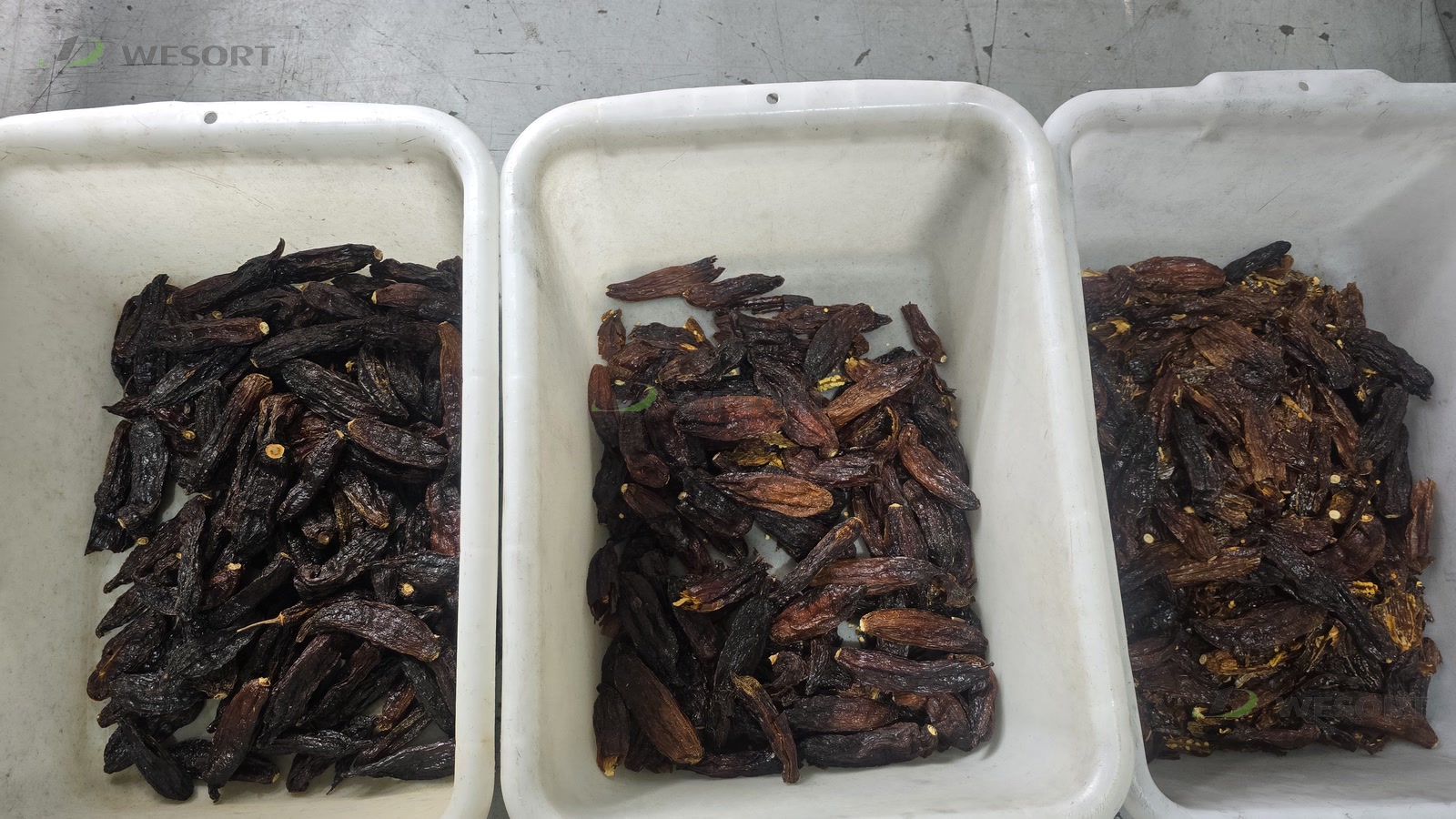
Un lot mélangé de chili séché a rarement un seul problème. Les gousses foncées se trouvent à côté des gousses rouge-brun, le produit entier est mélangé avec des morceaux cassés et les tiges ou le matériau fibreux restent dans le flux. WESORT aide l...
Fabricant de trieurs de couleurs de noix : comment choisir un fournisseur fiable-
Fabricant de trieurs de couleurs de noix : comment choisir un fournisseur fiable
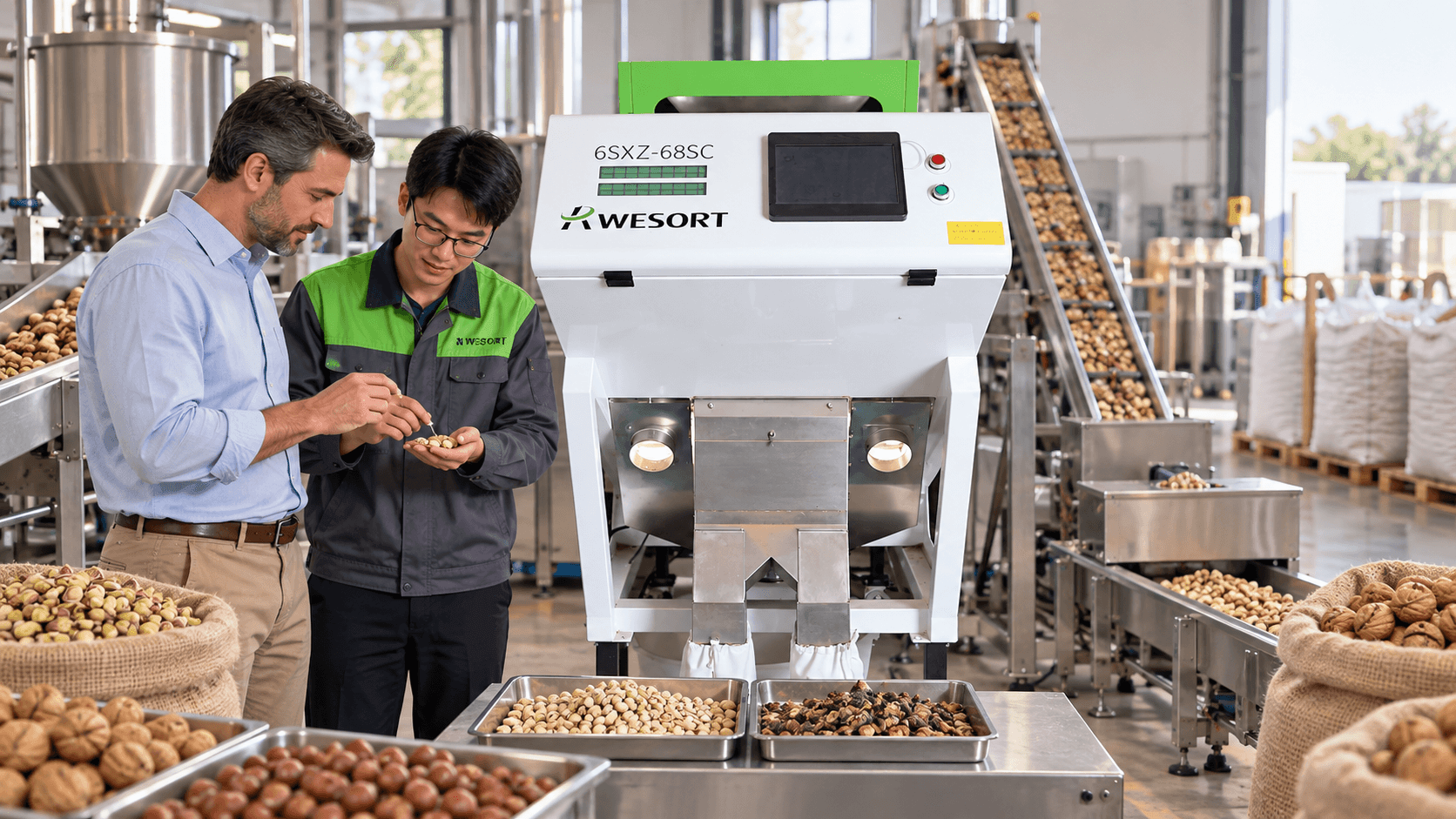
Un fiable Fabricant de trieurs de couleurs de noix devrait être en mesure de prouver trois choses avant de vous demander d'acheter : que votre matériel réel peut être séparé, que la machine proposée s'adapte à votre ligne de production et que le su...
Coquille ouverte, coquille fermée ou noyau : que devrait identifier un trieur de pistaches?-
Coquille ouverte, coquille fermée ou noyau : que devrait identifier un trieur de pistaches?
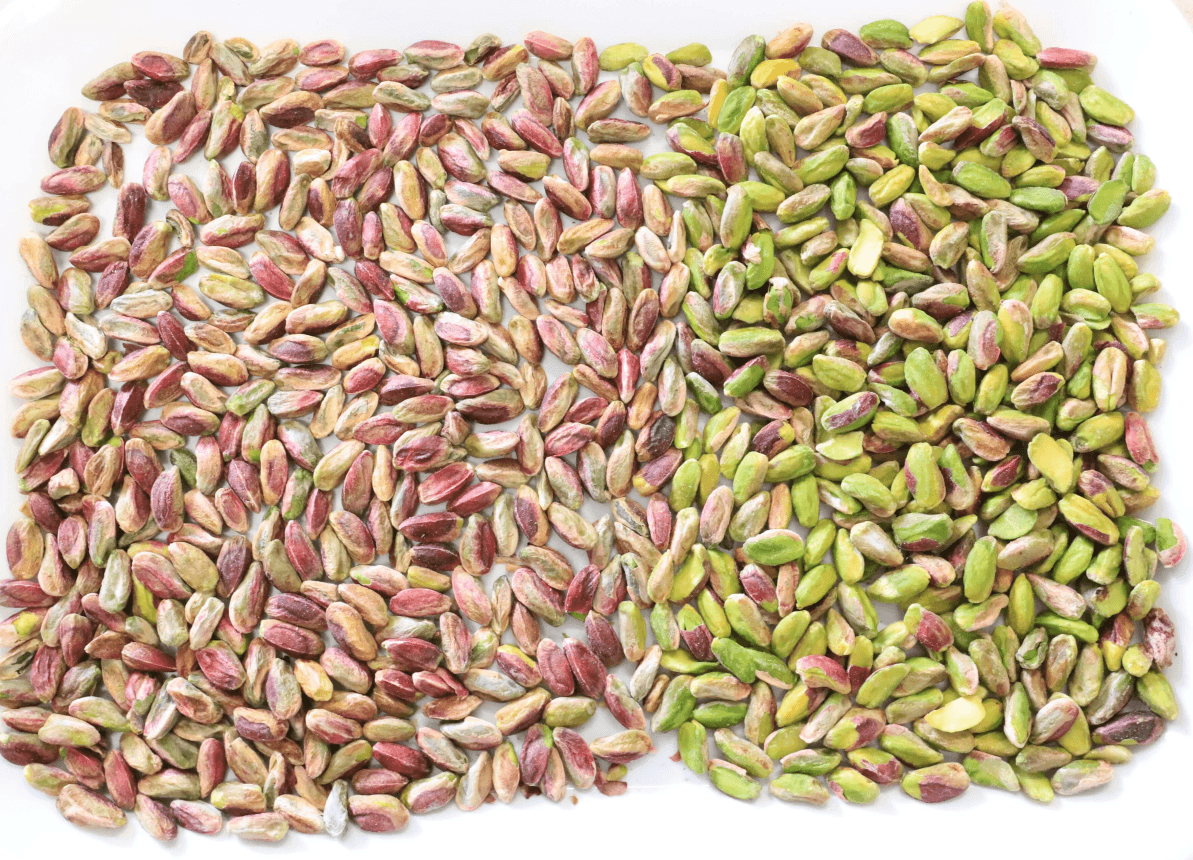
UNE Trieur de pistaches doit être configuré pour le matériau qui y entre, et non pour le mot "pistache" seul. Une ligne en coque peut avoir besoin de séparer les coquilles ouvertes et fermées. Une ligne de noyau peut avoir besoin de nuances de coule...
Comment choisir une machine de tri de pistaches pour les transformateurs turcs-
Comment choisir une machine de tri de pistaches pour les transformateurs turcs
Choisir le bon trieuse de pistaches en Turquie Il ne s'agit pas simplement de comparer la largeur de la machine, le nombre de chutes ou la capacité annoncée. Pour les transformateurs de pistaches, la question la plus importante est : De quoi exac...
Transformez-vous du café en Colombie? 5 points de données à préparer avant de choisir un trieur-
Transformez-vous du café en Colombie? 5 points de données à préparer avant de choisir un trieur
Choisir un Machine de tri du café en Colombie Ne devrait pas commencer par le nombre de chutes ou une capacité globale. Il devrait commencer par cinq faits sur le café entrant dans votre ligne et le produit que vous devez livrer. Sans eux, deux ma...
Quels défauts visibles une trieuse d'ail peut-elle séparer?-
Quels défauts visibles une trieuse d'ail peut-elle séparer?
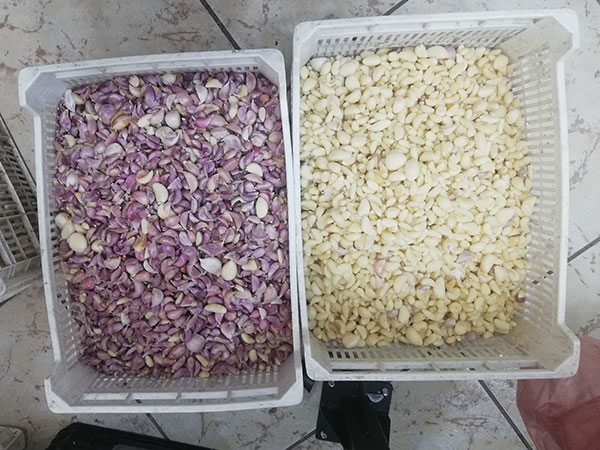
UNE trieuse d'ail peut séparer les clous de girofle qui diffèrent visiblement du produit accepté par leur couleur, leur couverture cutanée, leur forme, leur taille ou leur état de surface. Les cibles typiques comprennent les clous de girofle avec un...

Apportez votre café au stand 2466 : testez WESORT Live à Cafés de Colombia Expo 2026-
Apportez votre café au stand 2466 : testez WESORT Live à Cafés de Colombia Expo 2026
N'apportez pas seulement une carte de visite. Apportez le café que votre équipe a du mal à trier. Du 15 au 18 octobre, WESORT sera à Expo des cafés colombiens 2026 à Bogotá. Au stand 2466, les visiteurs peuvent voir comment le tri optique répond au...
Technologie de tri de café WESORT pour les cerises fraîches et les grains de café-
Technologie de tri de café WESORT pour les cerises fraîches et les grains de café
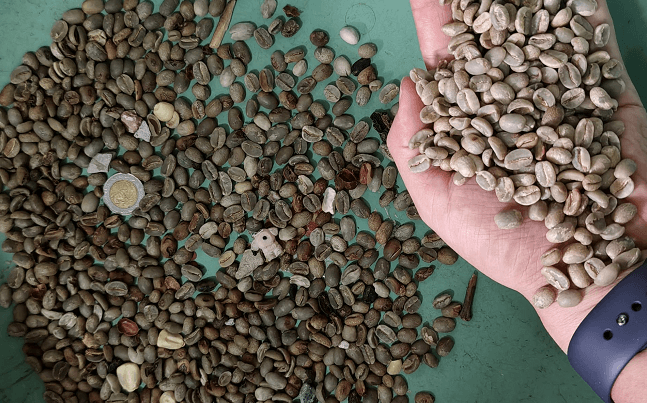
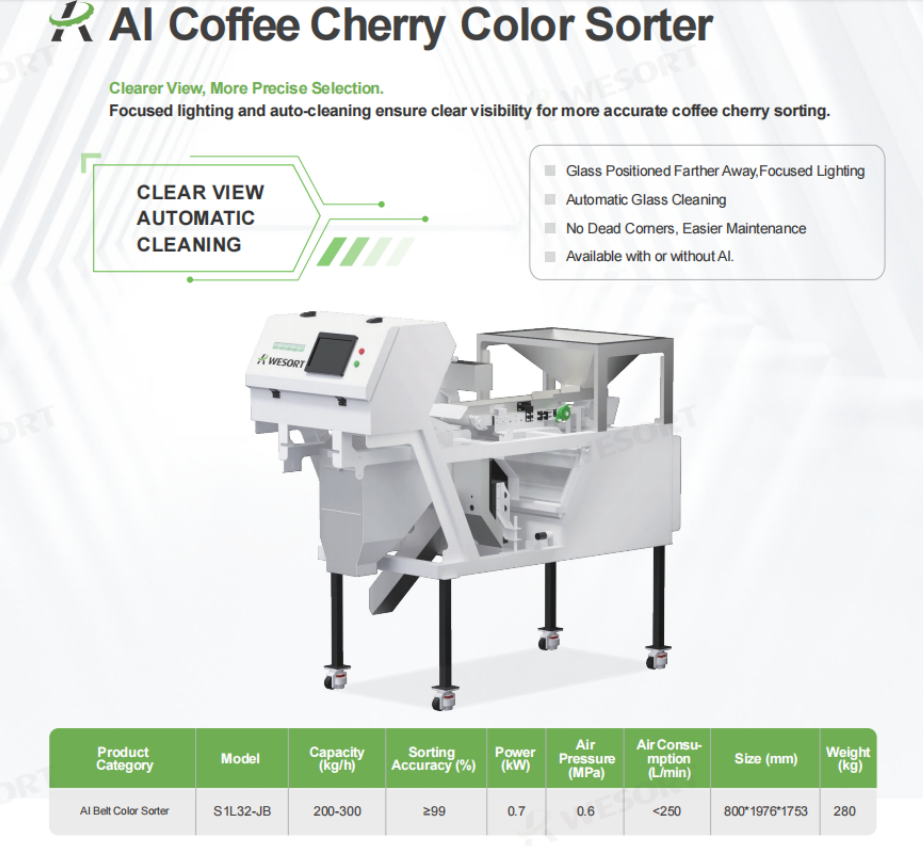
Contexte de l'industrie et introduction du problème La transformation du café combine la variation naturelle du matériau agricole avec des exigences de qualité et d'acheteur de plus en plus spécifiques. Les cerises de café fraîches, le café parchemin...
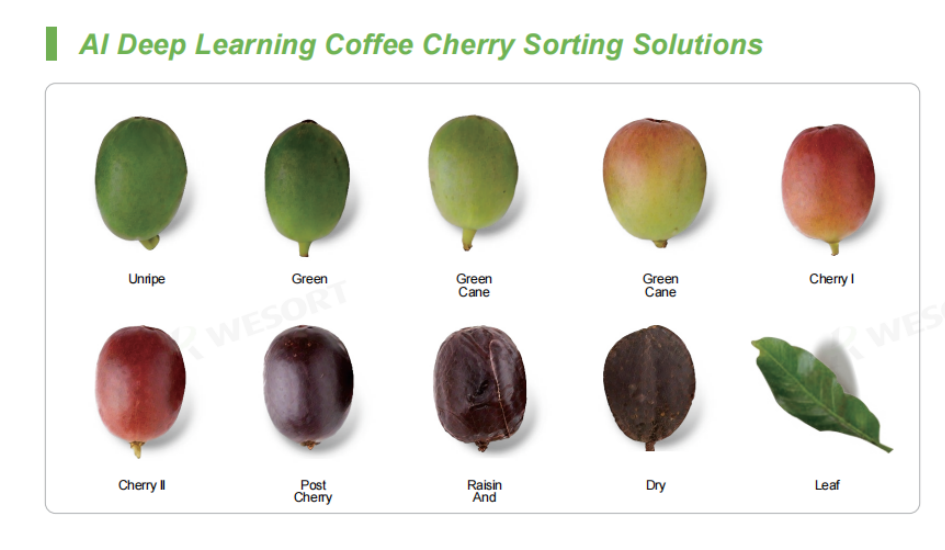
Comment trier les cerises de café avant le traitement - et quand le tri optique aide-
Comment trier les cerises de café avant le traitement - et quand le tri optique aide
Trier les cerises de café fraîches avant de les réduire en pâte ou de les sécher peut aider un transformateur à séparer des fruits visiblement différents en lots plus cohérents. La bonne approche dépend des cerises, de la norme d'acceptation et de l'...

WESORT présente la machine de tri de perles OmniPearl 360 IA : chaque perle, chaque angle-
WESORT présente la machine de tri de perles OmniPearl 360 IA : chaque perle, chaque angle
Chaque perle, chaque angle. TRI PANORAMIQUE DES PERLES IA À 360 ° La partie la plus difficile du tri des perles est de ne pas voir une perle une seule fois. C'est de voir suffisamment de sa surface pour prendre une décision cohérente. Une tache sombr...
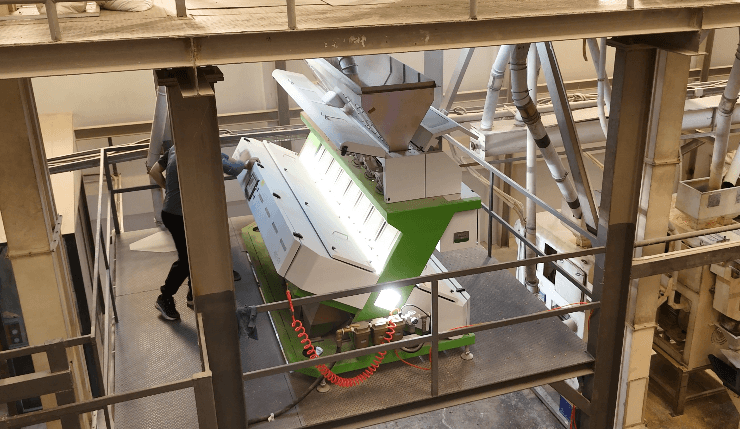
Comment choisir une machine de tri du maïs-
Comment choisir une machine de tri du maïs
Un moyen pratique de choisir un machine de tri du maïs est de comparer votre usine avec des transformateurs de maïs qui ont déjà résolu des problèmes similaires. WESORT a fourni des solutions de tri du maïs pour différentes échelles de production, ...
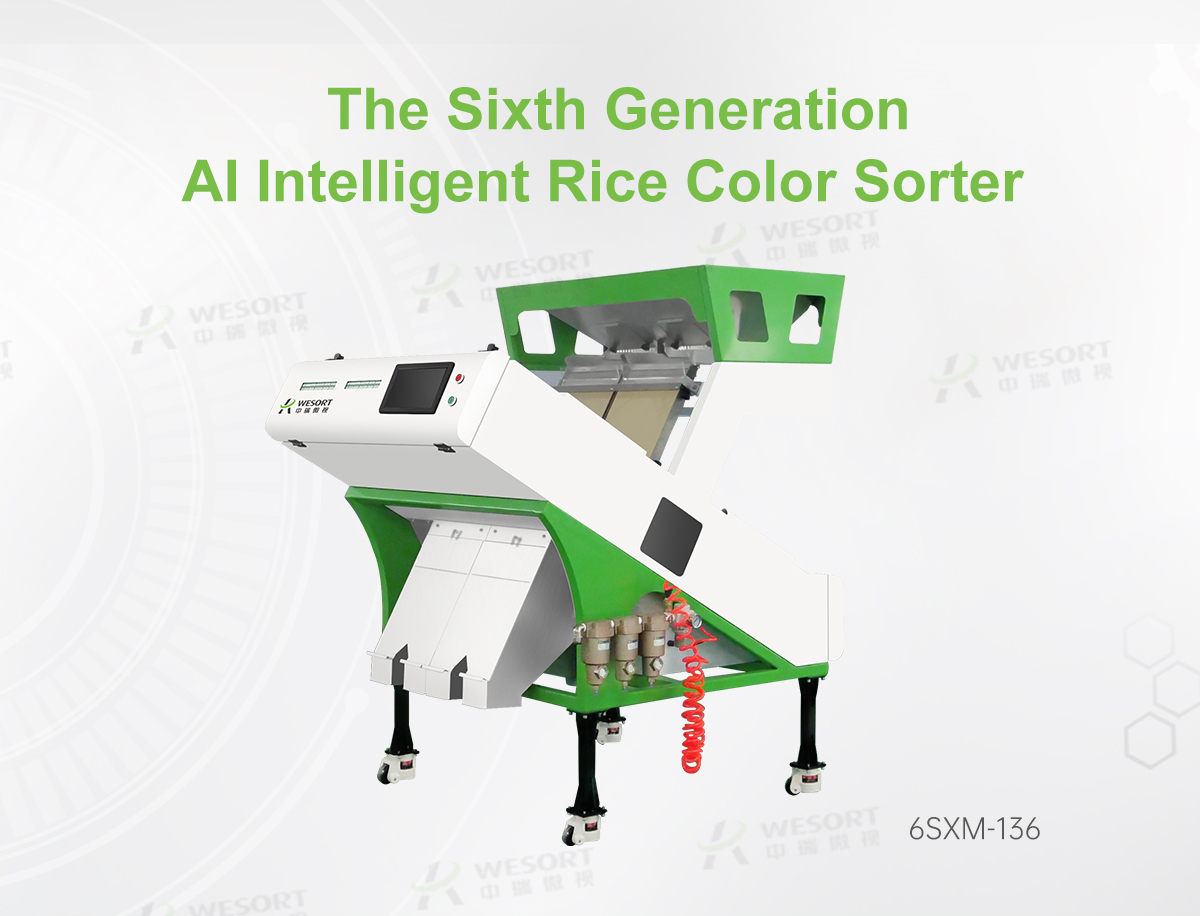
Trieur de riz optique : technologie pour une plus grande pureté des produits-
Trieur de riz optique : technologie pour une plus grande pureté des produits
Un Trieur de riz optique améliore la pureté en transformant les différences visibles en décisions de séparation contrôlées. L'alimentation stable présente le riz, l'éclairage et les caméras capturent les caractéristiques visibles, le logiciel évalue...
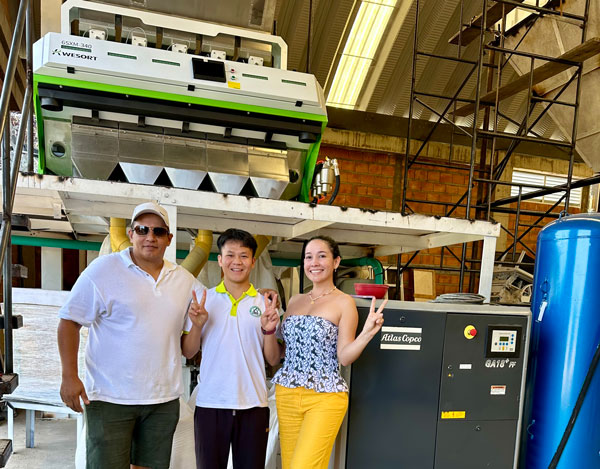
Comment choisir une machine de tri du riz pour une usine de transformation-
Comment choisir une machine de tri du riz pour une usine de transformation
Choisissez une machine de tri du riz en faisant correspondre la variété de riz, les défauts cibles, le débit requis, la norme du produit fini, la perte acceptable de bon riz et les utilitaires du site. Comparez les machines uniquement après avoir tes...
Tri des grains de café IA : comment WESORT élimine les grains défectueux et améliore la cohérence de la qualité-
Tri des grains de café IA : comment WESORT élimine les grains défectueux et améliore la cohérence de la qualité
Les transformateurs de café sont confrontés à un défi constant lorsqu'il s'agit de maintenir une qualité constante entre les grains de café verts et torréfiés. Les quakers, les grains brûlés, les grains de couleur anormale, les grains cassés et les m...
Trieur de couleurs de café au Mexique : comment WESORT aide les transformateurs de café à améliorer la qualité et l'efficacité-
Trieur de couleurs de café au Mexique : comment WESORT aide les transformateurs de café à améliorer la qualité et l'efficacité
Le Mexique a une industrie de transformation du café solide, les producteurs et transformateurs de café étant confrontés à des exigences de plus en plus exigeantes en matière de qualité, de cohérence et d'efficacité de production. Des cerises de café...
Quel équipement trie les grains de café? Un guide des machines de tri de grains de café IA-
Quel équipement trie les grains de café? Un guide des machines de tri de grains de café IA
Le contrôle de la qualité du café dépend fortement de l'équipement utilisé pour éliminer les grains défectueux, les matières étrangères et les incohérences de qualité avant la torréfaction ou l'exportation. Pour les transformateurs de café, les tor...
Comment automatiser le tri des grains de café avec la technologie IA Color Triter-
Comment automatiser le tri des grains de café avec la technologie IA Color Triter
Les transformateurs de café du monde entier subissent une pression croissante pour fournir une qualité constante tout en contrôlant les coûts et en respectant des normes d'exportation strictes. Le tri manuel - depuis longtemps la méthode par défaut...
La promotion WESORT 2026 à durée limitée est maintenant en ligne!-
La promotion WESORT 2026 à durée limitée est maintenant en ligne!
Améliorez votre solution de tri avec des avantages exclusifs En 2026. WESORT continue d'avancer avec innovation, qualité et engagement. Nous apprécions sincèrement la confiance et le soutien des clients du monde entier. Pour redonner à nos clie...
Comment trier les haricots par couleur et défauts visibles au Mexique-
Comment trier les haricots par couleur et défauts visibles au Mexique
Le meilleur résultat de tri des haricots ne commence pas par un réglage de la machine. Il commence par une description claire des haricots que vous voulez emballer, des défauts que votre acheteur rejette et de la quantité de bon produit que vous êt...
Comment choisir une trieuse de couleurs pour noisettes, pistaches, amandes et pacanes-
Comment choisir une trieuse de couleurs pour noisettes, pistaches, amandes et pacanes
Lorsque le traitement des noix entre dans ses semaines les plus chargées, des matières premières incohérentes, des défauts visibles et des matières étrangères peuvent rapidement devenir des problèmes de production. Pour la manipulation des processeur...
Triage du chili séché : retirez les gousses foncées, les cassures et le matériel végétal avant l'emballage-
Triage du chili séché : retirez les gousses foncées, les cassures et le matériel végétal avant l'emballage
Un lot mélangé de chili séché a rarement un seul problème. Les gousses foncées se trouvent à côté des gousses rouge-brun, le produit entier est mélangé avec des morceaux cassés et les tiges ou le matériau fibreux restent dans le flux. WESORT aide l...
Fabricant de trieurs de couleurs de noix : comment choisir un fournisseur fiable-
Fabricant de trieurs de couleurs de noix : comment choisir un fournisseur fiable
Un fiable Fabricant de trieurs de couleurs de noix devrait être en mesure de prouver trois choses avant de vous demander d'acheter : que votre matériel réel peut être séparé, que la machine proposée s'adapte à votre ligne de production et que le su...